
No credit card required. The free plan stays free.
On this page
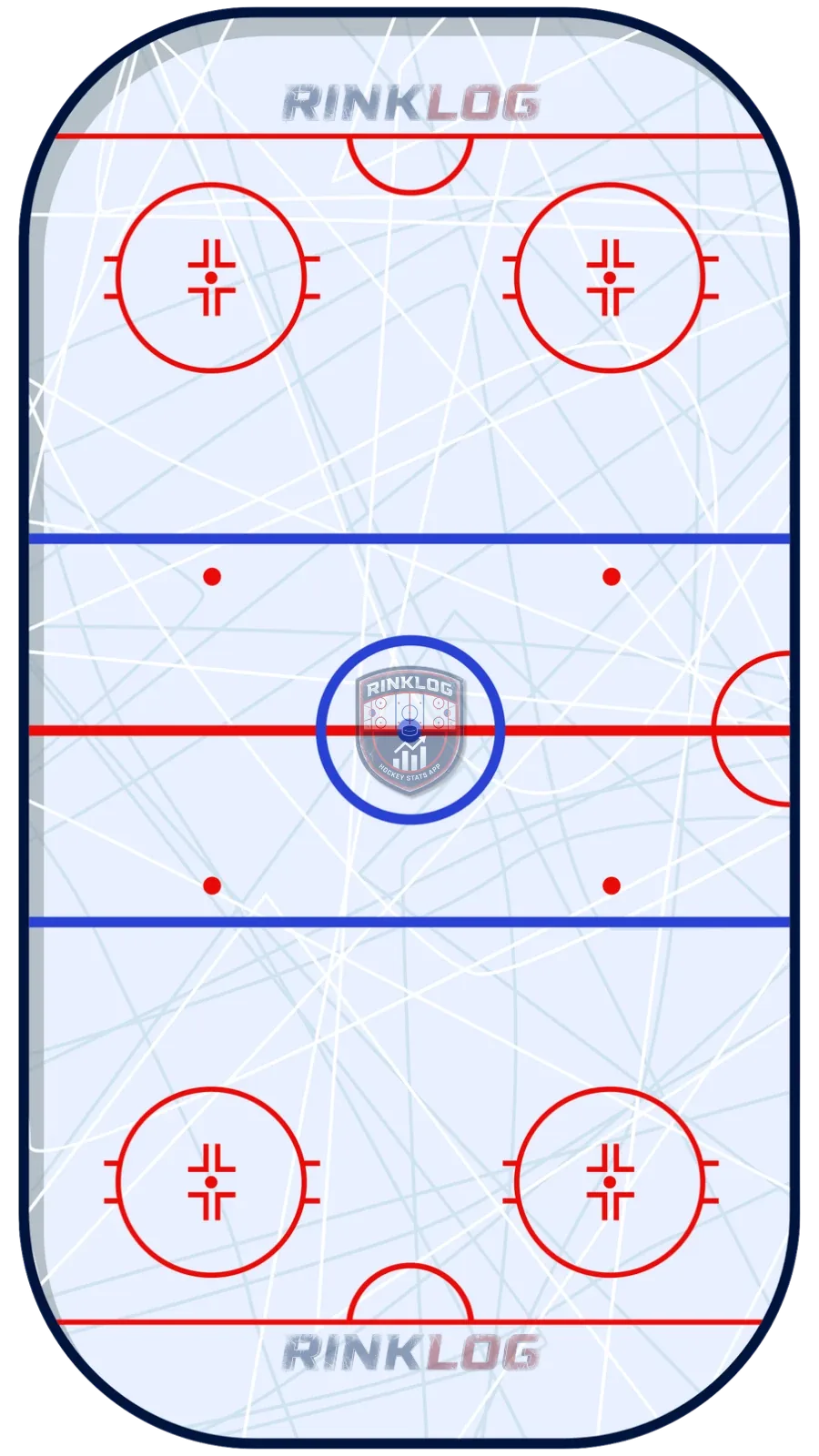
Phase 1 / 3Full ice
F1 charges the puck carrier O1 the moment he touches it, leaving his lane to press directly. F2 stays in the center-ice lane, while D1 and D2 already back up in tandem with a tight gap.
- Our team
- Opponents
- Pass
- Shot
- Puck
Tandem pressure, shown in the diagram above, is the most aggressive of the five. One forward charges the carrier the instant he touches the puck, a second stays in the center-ice lane to angle the first pass received, while both defensemen back up in tandem with a tight gap. The price: all four killers get stretched across two zones, a risk taken on purpose to force a quick clear.
Forwards wide offers the opposite, a token pressure that keeps a four-player wall at the defended blue line. Each winger presses once, then backs off and retakes a wide lane while skating forward, while both defensemen hold the middle. The system consistently forces the chip or the clear rather than a carried entry, at the cost of a central gap the moment a quick pass through the middle beats the defensemen to the spot.
The retreating box, covered on its own page, keeps every bit of opposing possession outside. Same-side press instead forces the entry to a single side of the ice, where all the pressure can concentrate: both forwards angle together toward the same side at the same moment, making the strong-side entry very hard, though a team that moves the puck well laterally in the neutral zone can break that pressure.
The passive 1-3 is the most patient of the five. The first forward only presses if he is certain of winning the puck or forcing the carrier on reception, the second stays in mid-zone behind him, and both defensemen stay high with a tight gap, alert to any stretched player behind them. That very vigilance for stretched players becomes the system's natural gap: a long breakaway pass can beat it.
All five of these systems get replayed identically at the defended blue line entry, with a precise timing payoff: blocking an entry there equals roughly twenty seconds of penalty time killed, with a chance to change while the power play stays stuck on the ice.
Which system to run depends mostly on the opponent's profile: aggressive against a team that hesitates, more patient against a team that moves the puck well. Count forced clears per shift: it is the most honest number for judging a penalty kill forecheck. The timestamped log RinkLog keeps then settles which of the five systems actually produces clears rather than just opposing puck movement.
- Tandem: aggressive, stretches all four players across two zones
- Forwards wide: passive wall at the blue line, forces the chip or the clear
- Retreating box: gives up the outside, never the middle
- Same-side press: needs perfect sync between both forwards
- Passive 1-3: the most patient, vulnerable to the stretched player
RinkLog measures and computes all of this automatically during your hockey, ball hockey and ringette games.
No credit card required. The free plan stays free.
Frequently asked questions
Which forecheck system should you pick on the penalty kill?
It depends on the opponent's profile and the unit's level. Tandem pressure suits an aggressive, well synchronized team; the passive 1-3 suits a unit that prefers to wait for the turnover rather than force it.
Why is blocking the zone entry so valuable?
Because it is worth roughly twenty seconds of penalty time killed in one shot, with the option to change players while the power play unit stays stuck at its own blue line.
The free plan lets you create a player and track their games with no credit card.
Create my free accountOn the same topic
- What is the penalty kill box?The penalty kill box explained: four compact killers, the retreating box that gives up the outside, its strengths, weaknesses, and how it gets beaten.
- How does a hockey penalty kill work?How a hockey penalty kill works: face-offs, forecheck systems, the box, the diamond press, five on three, and what makes a great penalty killer.
- What are the hockey forechecking systems?Hockey forechecking systems explained: the 1-2-2, 2-1-2, left wing lock, torpedo and control forecheck, with strengths, weaknesses and counters.