
No credit card required. The free plan stays free.
On this page
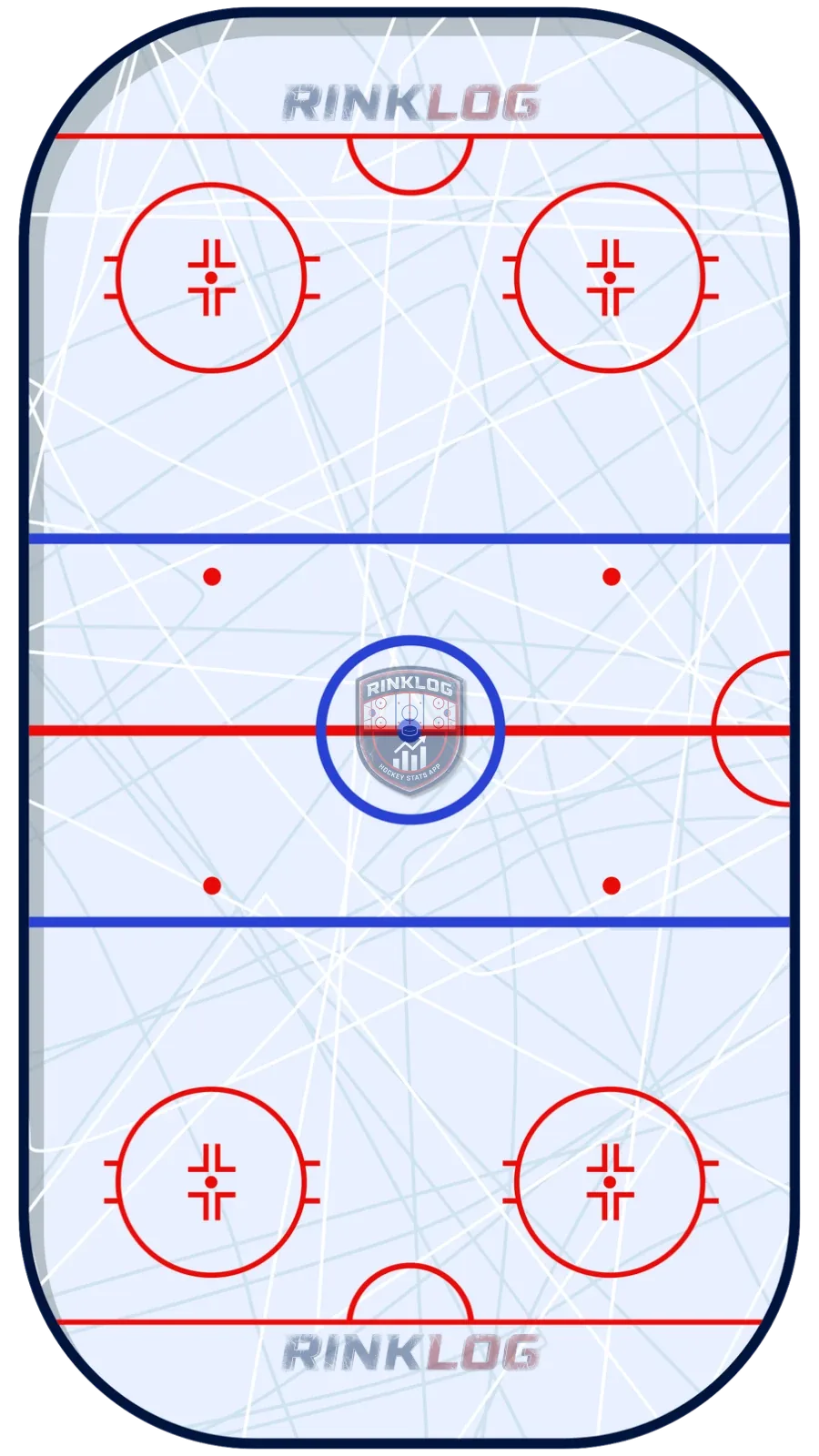
Phase 1 / 3Full ice
The retreating box backs up as a moving wall: F1 and F2 hold each wall, lined up with the face-off circles, while D1 and D2 tighten toward the middle. All five attackers are moving up, but nobody gets through the middle yet.
- Our team
- Opponents
- Pass
- Shot
- Puck
The retreating box shows the logic best. The moment the opponent touches the puck leaving his own zone, both wingers force if they can, then each backs up along a wall, lined up with the face-off circles. Both defensemen tighten toward the middle of the ice at the same time: all four players retreat together, like a moving wall, never giving up the middle.
Once the defended blue line is crossed, whichever killer is on the carrier's side forces him to his backhand and denies the return pass to where the puck came from. That is the hinge moment: the box deliberately chooses to give up the zone entry rather than the middle of the ice, an accepted trade rather than a flaw.
The box's strength is its simplicity. Four players moving as one block leave little room for confusion over who covers whom, and the formation stays symmetrical no matter which side the puck moves to. It suits younger units especially well, before they have the reads needed for a more mobile system like the diamond.
The weakness is just as clear, and the book names it directly: an opponent skating the puck with speed outside the box keeps possession without a real challenge, until it gets tested deeper in the zone. The box therefore gives up more zone entries than an aggressive system, but never through the middle, which stays the trade it is built around.
Spotting the box takes one glance: two players always high, two always low, sliding together with the puck instead of chasing every carrier. What is left to find out is what it actually concedes: harmless outside shots, exactly the trade the system offers, or a real break through the middle. The map of shots allowed in RinkLog, each one timestamped and located, answers that over a full season.
- Both wingers force once, then back up aligned with the face-off circles
- Both defensemen tighten to the middle: the wall retreats together, never split
- Force the carrier to his backhand, never toward his strong side
- Deny the return pass to wherever the puck came from, every time
- Giving up the outside is a deliberate trade, giving up the middle never is
RinkLog measures and computes all of this automatically during your hockey, ball hockey and ringette games.
No credit card required. The free plan stays free.
Frequently asked questions
Why does the retreating box give up zone entries?
Because that is the trade it chooses on purpose: keeping the four players compact in the middle costs entries along the outside, but nearly eliminates any pass across the ice. The book names it directly as the main counter to this system.
Does the box suit every team?
It is especially well suited to teams that still lack the reads needed for more mobile systems. Its simplicity, four players moving as one block, limits confusion over who covers whom, a real edge for a young unit.
The free plan lets you create a player and track their games with no credit card.
Create my free accountOn the same topic
- What is the diamond press on a penalty kill?The diamond penalty kill press: a targeted read when the point man slides along the blue line, the Czech press, the low-high read, and the gap it accepts.
- How does a hockey penalty kill work?How a hockey penalty kill works: face-offs, forecheck systems, the box, the diamond press, five on three, and what makes a great penalty killer.
- How does the 2-3 defensive zone system work?The 2-3 defensive zone system: five zones, engagement, support, net, strong-side high and back-side slot, with the most common breakdowns.