
No credit card required. The free plan stays free.
On this page
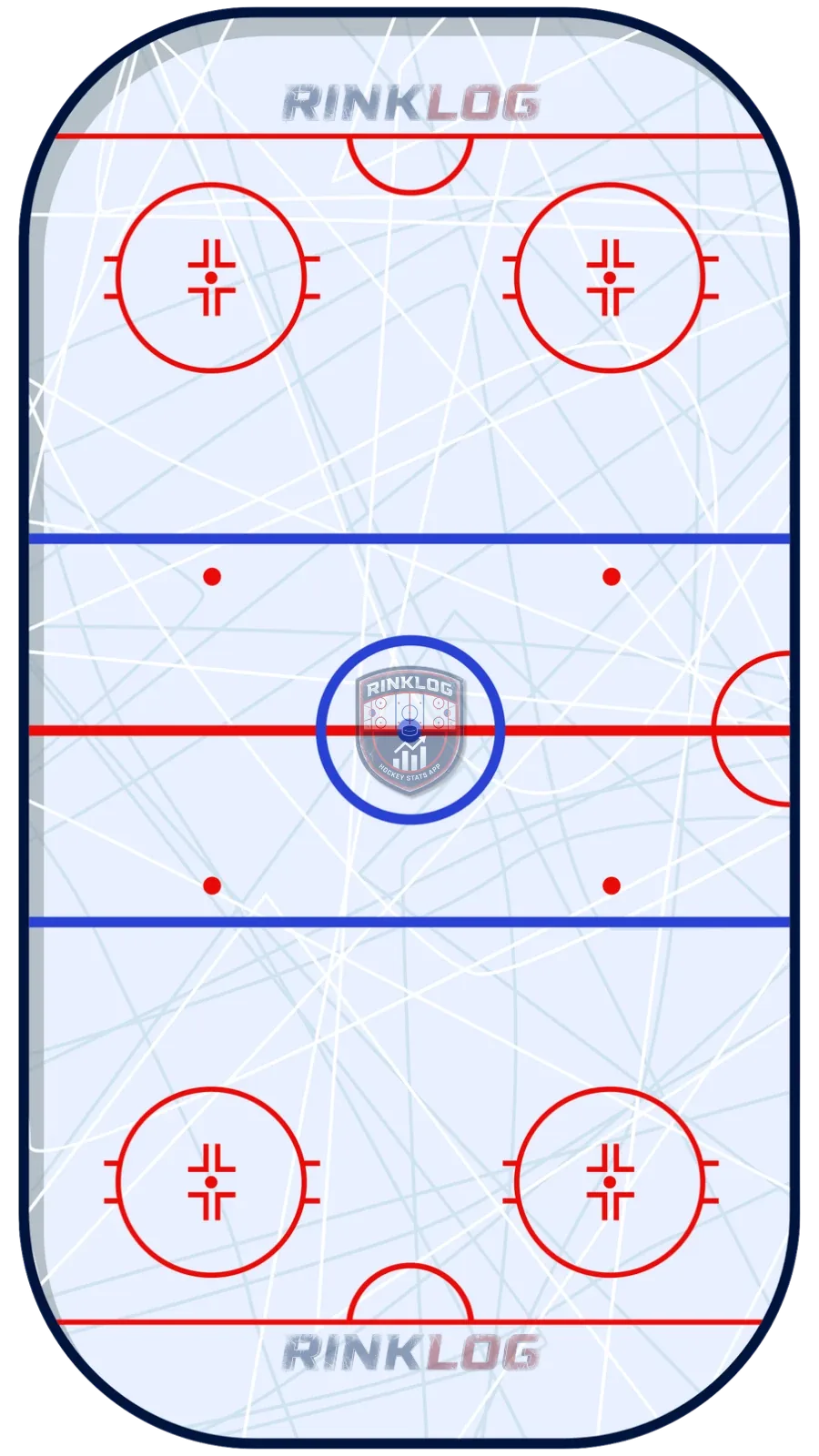
Phase 1 / 5Offensive zone
Setup: D1 and D2 hold both points, F1 quarterbacks from the top of the slot, F2 and F3 wait at the net. The opposing triangle protects the middle.
- Our team
- Opponents
- Pass
- Shot
- Puck
The shape gives the system its name: the three high players trace the arc of an umbrella over the zone, and the puck moves from one edge of that arc to the other. On a five on three, the base positions put a right-shot defenseman on the left, a left-shot defenseman on the right and a right-shot forward at the top, so every lateral pass arrives on the proper blade for an immediate shot.
Four options branch from the same start. Option 1 moves the puck from the top to one point, then across to the other point for the one-timer. Option 2 sends it back to the top man for the same shot. Option 3 returns it to the first point. Option 4 abandons the high triangle: the carrier drops the puck to one of the two low players, who feeds his partner at the net or moves it back up to the point.
The strength of the setup is arithmetic. The triangle forces the coverage into two long lateral trips within a few seconds, and it is the trip back that creates the one-timer window. Against only three killers that race is lost the moment the puck moves quickly: the coverage has to choose between the high triangle and the two low players.
The weakness is just as clear: without a genuine one-timer threat the umbrella produces nothing. All three high players have to be credible on every reception, otherwise the coverage stops stepping out and all that remains is sterile perimeter passing. The other classic error comes from the low players drifting too far off the net, losing their double role of screen and outlet at once.
To counter an umbrella, a penalty kill has to accept a sacrifice. Covering only the high triangle leaves both low players completely alone in front of the goalie. Covering the low players frees one of the three shooters. The usual answer is to charge the carrier as the pass arrives rather than waiting, killing the one-timer window before it opens.
From the stands, the umbrella reads as geometry: three players arced above the circles, two glued to the goalie. Follow the shots leaving the top and both points, then watch what follows each shot: rebound frozen, rebound lost, puck cleared. With RinkLog every logged shot carries its origin zone, so you can verify afterwards whether the unit truly shot from the triangle or merely moved the puck around.
- The three triangle players must stay a constant one-timer threat
- The two low players slide, but never leave the area around the net
- Every option starts from the same setup: the read decides, not chance
- The one-timer comes from the recovery trip forced on the coverage
- Without a heavy shooter at the top, a box or a 2-3 beats the umbrella
RinkLog measures and computes all of this automatically during your hockey, ball hockey and ringette games.
No credit card required. The free plan stays free.
Frequently asked questions
Umbrella or 1-3-1: what is the difference?
The 1-3-1 spreads players over three levels, with a distinct slot player and net man, and works as a five-on-four setup. The umbrella concentrates three shooters in an arc high in the zone and is mostly used with a two-man advantage, where the coverage lacks the bodies to track that arc.
Does the umbrella work five on four?
The reference manual does not present it as a five-on-four setup: it offers the overload, the 1-3-1 and the split for that situation and reserves the umbrella for five on three and four on three. With four killers in a box, the high triangle is far easier to cover.
The free plan lets you create a player and track their games with no credit card.
Create my free accountOn the same topic
- How do you score on a five on three power play?The five on three in hockey: why it should produce a goal about half the time, the three possible setups, and the options each one offers.
- How do you play a four on three power play?The four on three in hockey: the two possible setups, box and umbrella, how to choose between them, and the low two on one the box tries to exploit.
- How does a hockey power play work?How a hockey power play works: breakout, zone entry, overload, 1-3-1 and split setups, five on three, four on three, and realistic success rates.