No credit card required. The free plan stays free.
On this page
Phase 1 / 4Full ice
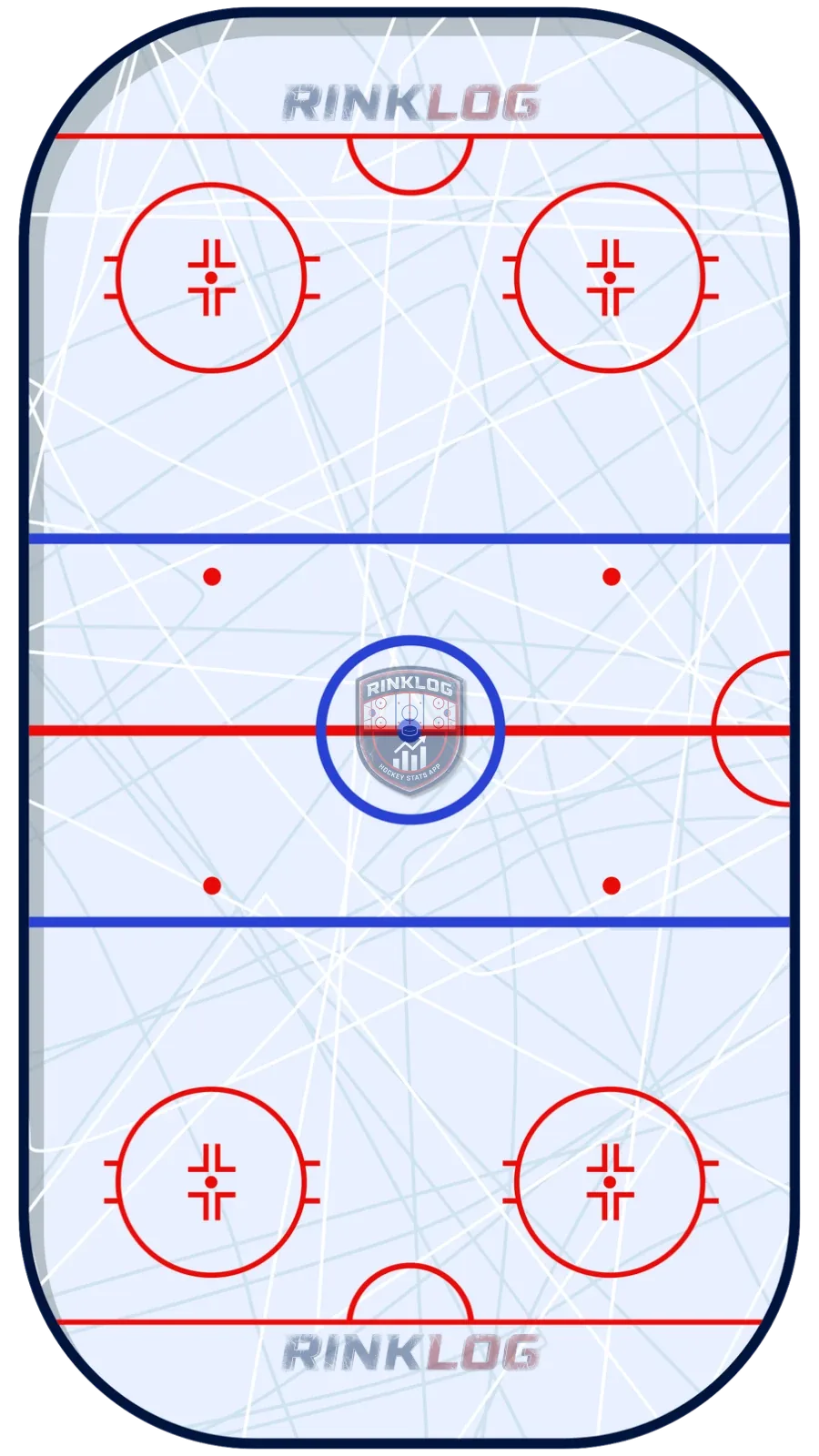
A turnover in the offensive zone: F1 immediately gets into a wide lane, always keeping the play in view. D1 takes the middle of the ice, D2 takes the strong side, while F2 and F3 press the attack from behind.
- Our team
- Opponents
- Pass
- Shot
- Puck
A team that works hard is recognized first by its willingness to come back and defend. Five keys apply across all three philosophies: get back to the high recovery position the moment the puck moves away, press the attack from behind with all three forwards, arrive in numbers at the defensive blue line, have fixed rules for who plays the carrier, and watch for players stretched deep into the neutral zone. Late in a game, a solid high position from the third forward becomes the key to eliminating odd-man rushes: with no teammate in support, he runs a soft lock, no contact sought, just an angle that pushes the carrier back toward his own zone and costs him time, while staying inside the rush rather than behind it, ready to press if a good pass still gets through up ice.
The wide-lane lock splits the ice into three distinct lanes: F1 gets back into a wide lane and becomes responsible for it, D1 takes the middle of the ice, D2 takes the strong side where the carrier is, while F2 and F3 press the attack from behind. The three defensive players try to stand up together at the blue line, forming a three-level wall.
The midlane backcheck instead relies on the first forward back: he wins the middle of the ice first and protects it down to the low slot before coming back out in support, while the defensemen play the outside lanes. His mere presence in the middle intimidates the carrier and forces him to stay wide, with no room inside.
Hound the puck is the most aggressive philosophy: the first forward charges straight at the carrier instead of winning the middle, and keeps pressing the new puck after every pass. Two rules have to be fixed in advance to avoid confusion: what to do if the forwards do not catch the play by the blue line, and what to do if they fail to press the pass in time.
Every philosophy gives something up: the wide-lane lock offers the clearest structure but depends on a player locking his lane fast enough; the midlane backcheck protects the inside first but leaves the outside to the defensemen alone; hound the puck denies time and space everywhere, at the cost of possible confusion between forwards and defensemen if the rules are not clear.
One frozen image at the defensive blue line tells the whole story of the retreat: on a good backcheck it should show more defending players than attacking ones, shift after shift. RinkLog timestamps every turnover forced in the neutral zone, a direct indicator of how good the retreat actually is over a full game, well beyond a simple hit count.
- Getting back high the moment the puck moves away prevents most odd-man rushes
- Wide-lane lock: three lanes, three clear owners
- Midlane backcheck: protect the inside first, leave the outside to the defensemen
- Hound the puck: the most aggressive, demands rules fixed in advance
- On a frozen image at the blue line, there should be more defenders than attackers
RinkLog measures and computes all of this automatically during your hockey, ball hockey and ringette games.
No credit card required. The free plan stays free.
Frequently asked questions
What is the difference between the wide-lane lock and the midlane backcheck?
The wide-lane lock assigns each player a specific lane, left, center or right. The midlane backcheck instead relies on a single player, the first forward back, who protects the entire inside while the defensemen play the outside.
Why does verbal communication matter so much on the backcheck?
Because backchecking forwards read the situation from an angle often reversed compared to the defensemen. Without a fast, clear call, two players can end up thinking they cover the same opponent while a third stays completely free.
Which backchecking philosophy suits minor hockey best?
The wide-lane lock stays the easiest to teach, because it assigns a clear responsibility to each player without demanding the fast read that hound the puck requires.
The free plan lets you create a player and track their games with no credit card.
Create my free accountOn the same topic
- What is the neutral zone trap in hockey?The neutral zone trap explained: definition, history (popularized in the 1990s, the Devils, European hockey), how it works, and its documented weakness.
- How do you defend the rush in hockey?Defending the rush in hockey: reading the odd-man break, the real two on one, the two ways to play it, and why holding the middle is the fallback.
- What are the hockey forechecking systems?Hockey forechecking systems explained: the 1-2-2, 2-1-2, left wing lock, torpedo and control forecheck, with strengths, weaknesses and counters.