
No credit card required. The free plan stays free.
On this page
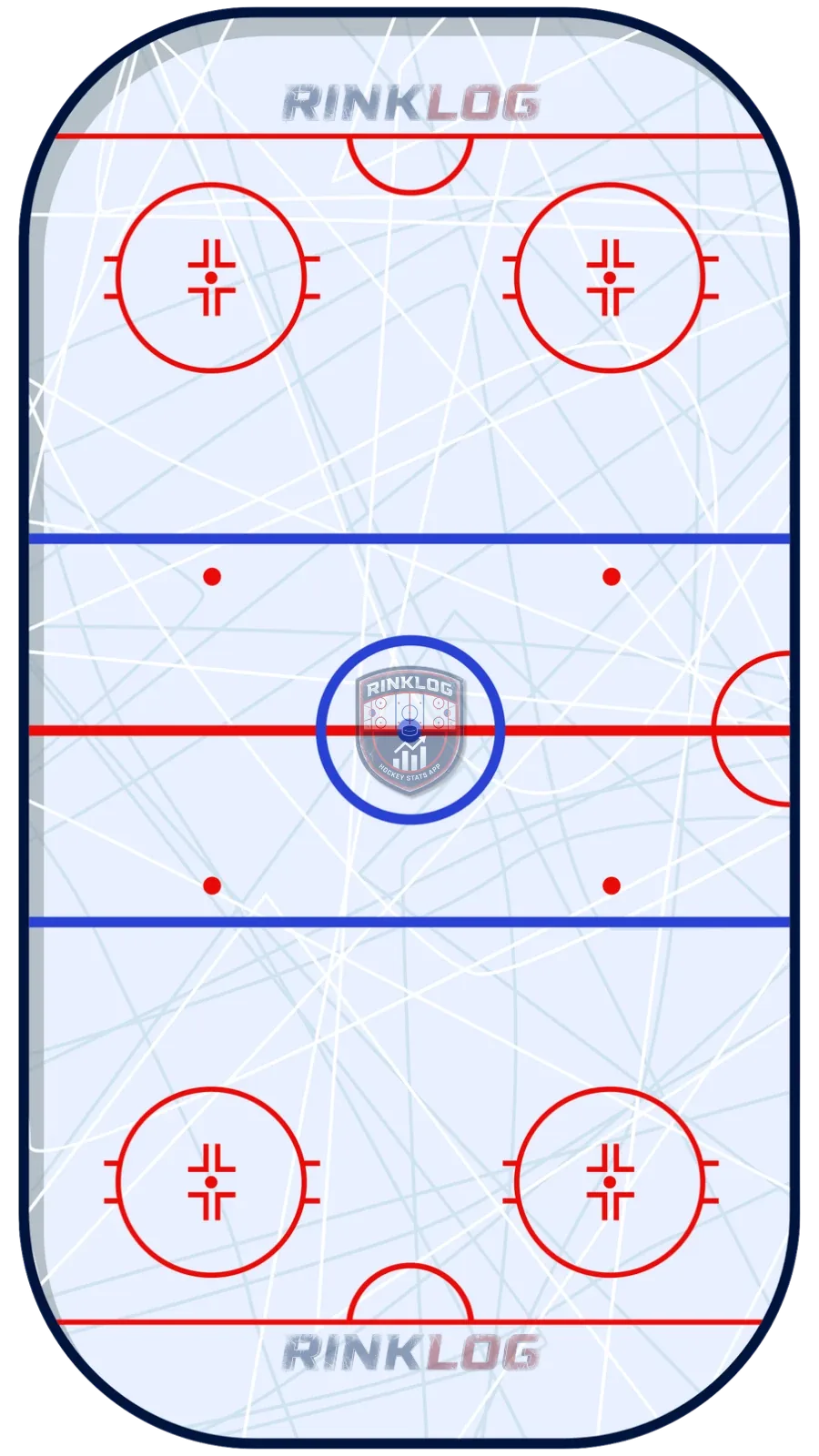
Phase 1 / 4Full ice
The 1-2-2 mid-ice lock refuses the attack any route through the middle. F1 is set to steer the carrier, F2 waits to challenge him before the red line, F3 already locks the middle hard, D1 and D2 stay high. D2 is the designated owner of the left wall, the lane where winger O4 patrols.
- Our team
- Opponents
- Pass
- Shot
- Puck
The term neutral zone trap, in its broad media sense, covers several neutral-zone systems that refuse the opponent any route through the middle. The book details five: the wide 1-2-2, the 1-3-1, the 2-1-2, the 1-2-2 mid-ice lock and the retreating 1-2-2. The last two, the tightest of the five, are the ones the general public most associates with the word trap.
In the 1-2-2 mid-ice lock, F1 steers the carrier to one specific side with his stick and angle, choosing to close either the return pass or the wide pass, a priority the team sets in advance. F2 then challenges the carrier before he reaches the red line, forcing him to dump the puck or get it chipped away from behind.
F3 locks the middle of the ice hard, denying any pass to a player in the middle: it is the system's absolute priority, the one that forces the opponent into a long, wide pass just to have a chance at entering the zone. D1 stays ready to retrieve a chip behind F2, while D2 watches specifically for wide passes to the winger.
That is exactly where the documented weakness sits: D2 has to stay alert at all times to the wide pass toward a winger building speed before the pass even arrives, the most common way opposing teams beat this system. A slow reaction from D2 lets the winger enter the zone with all the speed he already built.
The trap has always divided opinion: it cuts down quality chances allowed and suits a team that lacks offensive depth, but it also slows the game down and turns off fans who come to watch speed. Allowing the two-line pass in most leagues actually made the neutral zone larger in practice, put speed back into the game and limited this kind of defensive system.
A compact wall around the red line and almost no room in the middle: the trap is recognizable with the naked eye, even without knowing its five variants. Watch D2 above all on wide breakouts, the system's documented breaking point. RinkLog timestamps every successful zone entry and every forced clear, enough to measure over a full game whether an opposing trap truly holds or gets beaten through that exact lane.
- A broad media term mostly tied to the 1-2-2 mid-ice lock and the retreating 1-2-2
- F3 locks the middle: the absolute priority, zero tolerance for passes through it
- Documented weakness: the wide pass to a winger already up to speed
- Popularized in the 1990s, associated with the Devils, inherited from European hockey
RinkLog measures and computes all of this automatically during your hockey, ball hockey and ringette games.
No credit card required. The free plan stays free.
Frequently asked questions
Where does the name neutral zone trap come from?
The term became popular in the 1990s, associated with the New Jersey Devils, but the principle comes from European hockey, where the extra room on international ice had already pushed teams toward this kind of collective neutral-zone retreat.
How do you beat the neutral zone trap?
Through the documented weakness of the 1-2-2 mid-ice lock: a long, wide pass to a winger who has already built speed before the pass arrives, exactly the moment D2 reacts too late.
Is the neutral zone trap still used in modern hockey?
Yes, in a more measured form. Since the two-line pass was allowed, the neutral zone has effectively grown and the game has gained speed, but versions of the 1-2-2 and the retreating 1-2-2 are still taught at every level, including late in games to protect a lead.
The free plan lets you create a player and track their games with no credit card.
Create my free accountOn the same topic
- What is the 1-2-2 forecheck?The 1-2-2 forecheck in hockey: F1 deep, F2 and F3 wide at the circles, defensemen who never pinch on a direct pass. Strengths, weaknesses, counters.
- What is backchecking in hockey?Backchecking in hockey: wide-lane lock, midlane backcheck and hound the puck, compared, with the keys to an effective defensive retreat.
- How do you beat a neutral zone trap in hockey?Beating the neutral zone trap: the blue-to-blue stretch, the strong-side slant and three high, three controlled breakouts compared side by side.