
No credit card required. The free plan stays free.
On this page
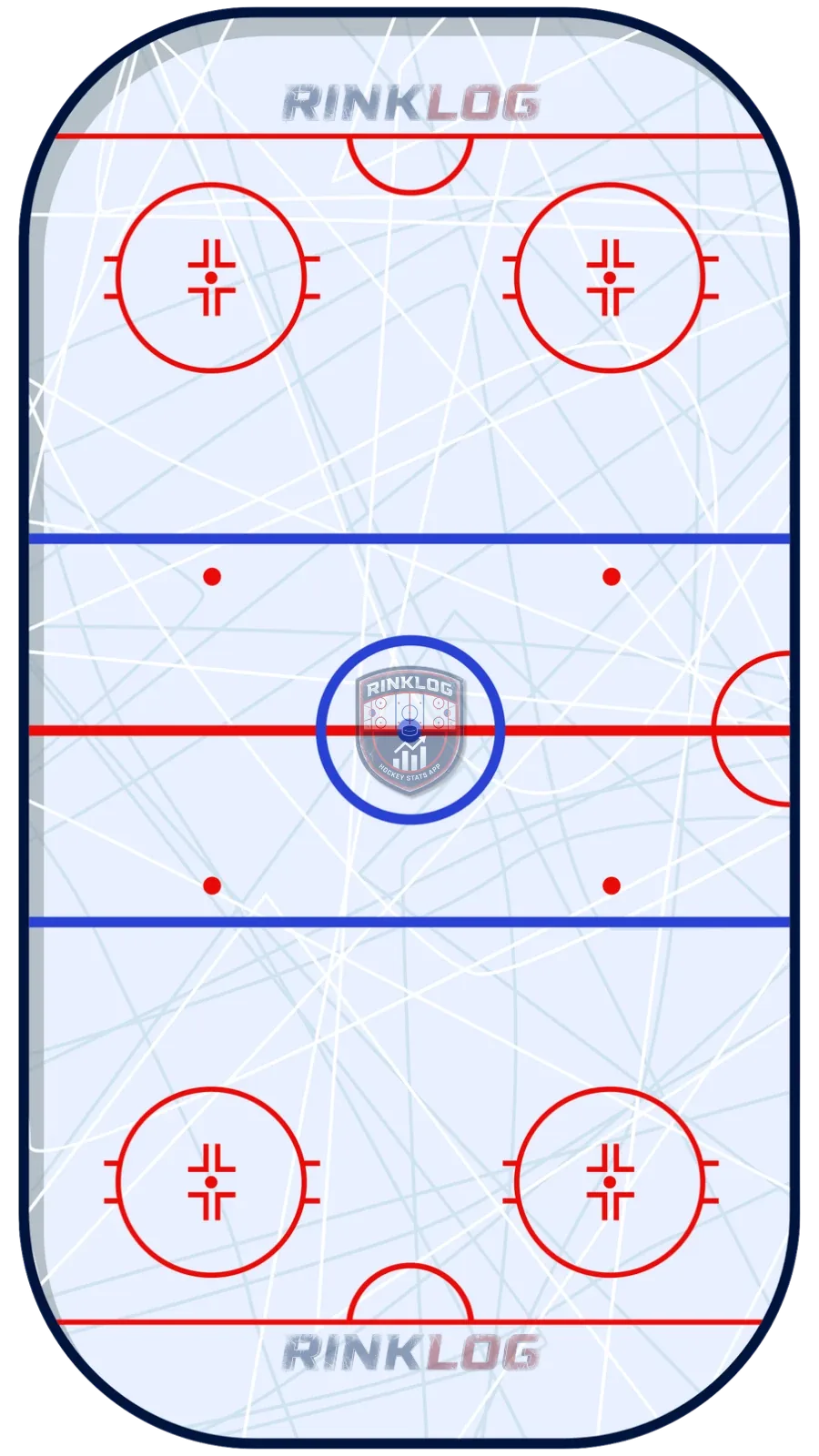
Phase 1 / 3Full ice
D2 calls "up" the moment D1 touches the puck: he has read that the opponent cuts off the back of the net with X1 and holds the weak side with X2, leaving the strong side open for LW, already high on the wall.
- Our team
- Opponents
- Pass
- Shot
- Puck
Phase 1 / 3Full ice
D1 has a one-step lead on X1, who is tight on his heels. D2 calls "wheel": the net will serve as a screen. C, D2, LW and RW hold their starting spots, ready to support the moment D1 comes back out.
- Our team
- Opponents
- Pass
- Shot
- Puck
Phase 1 / 3Full ice
D1 starts a move toward the net as if to circle it, but X1 is glued to him with no gap at all, unlike the wheel. D2 sees it and calls "reverse" rather than let D1 expose himself behind the net.
- Our team
- Opponents
- Pass
- Shot
- Puck
Up is the default read: the moment D1 touches the puck, D2 calls "up" if he has read that the opponent takes away the back of the net or the weak side, leaving the strong side open. The call removes all hesitation, D1 knows exactly what to do the instant he touches the puck: a direct, short pass to the winger already high on the wall, while the center slides into support and the weak-side defenseman comes up behind the play, never getting ahead of it.
Wheel gets used when D1 has a lead, roughly one step, on the forechecker: D2 calls "wheel" and D1 quickly circles the net cutting tight, using the net itself as a screen against the pursuer. The move only works if the lead is real; circling too wide cancels the screen effect, and trying it without a real lead exposes the puck instead of protecting it.
Reverse kicks in the opposite case: the forechecker is glued to D1's back with no gap at all. Rather than risk the wheel, D1 starts a move toward the net as if to circle it, then banks the puck the other way to D2, waiting on the far side. The forechecker, committed in the wrong direction, ends up wrong-footed. One variant has the center and winger swap trajectories to preserve their speed, and a third option reverses instead toward the center stationed in the corner.
Over answers an opponent who has flooded one entire side of the ice with forecheckers. D2 shifts to the opposite corner and calls "over": D1 then has to move the puck fast, without carrying it toward the pressure, or the forechecker keeps his stride going and catches D2 right at the reception. The speed of that first pass matters more than its distance.
Rim comes out when the opponent forechecks hard and a direct pass risks too much interception: D1 fires the puck hard around the boards instead of handing it off cleanly. The winger receiving it has to stop it first, protect it, then look for an option, because an opposing defenseman pinching hard fights for it the instant it arrives. It is the only one of the five calls where the puck is never really under control before the handoff.
All five calls share one lesson: naming the call before the puck even arrives removes hesitation, the real enemy of a breakout under pressure. A player who masters all five reads pressure faster than he ever reacts to it, shift after shift. On the ice, listen for these words before the play even takes shape, they announce what comes next with a head start. Tagging each breakout with the call actually used takes a second in RinkLog, leaving one thing to compare afterward: which of the five produces the most possession for a given team over a full season.
- Up: direct strong-side breakout, when the net or weak side is taken away
- Wheel: circles the net as a screen, only with a real one-step lead
- Reverse: banks the puck the other way when the forechecker is glued to the back
- Over: switches the puck sides fast, without carrying it into the pressure
- Rim: fires the puck hard around the boards against a heavy forecheck
RinkLog measures and computes all of this automatically during your hockey, ball hockey and ringette games.
No credit card required. The free plan stays free.
Frequently asked questions
Which breakout call should be the first read?
Up, whenever nothing signals a specific pressure read: it is the default reflex, a direct, short pass to the winger already high on the strong-side wall.
What is the difference between wheel and reverse?
The wheel requires the defenseman to have a real step of a lead on the forechecker to circle the net as a screen. The reverse is used in the opposite case, when the forechecker is glued to his back with no gap: the puck instead switches direction behind the net.
Why is rim different from the other four calls?
Because it is the only call where the puck is never really under control before the handoff: it is fired hard around the boards, and the winger receiving it has to stop it and protect it first before looking for an option.
The free plan lets you create a player and track their games with no credit card.
Create my free accountOn the same topic
- How do you break out of your own zone in hockey?Hockey breakout principles: three pressure levels, roles by position (center, wingers, goalie, defense) and three golden rules for a clean exit.
- What are the hockey forechecking systems?Hockey forechecking systems explained: the 1-2-2, 2-1-2, left wing lock, torpedo and control forecheck, with strengths, weaknesses and counters.
- How do you beat a neutral zone trap in hockey?Beating the neutral zone trap: the blue-to-blue stretch, the strong-side slant and three high, three controlled breakouts compared side by side.