
No credit card required. The free plan stays free.
On this page
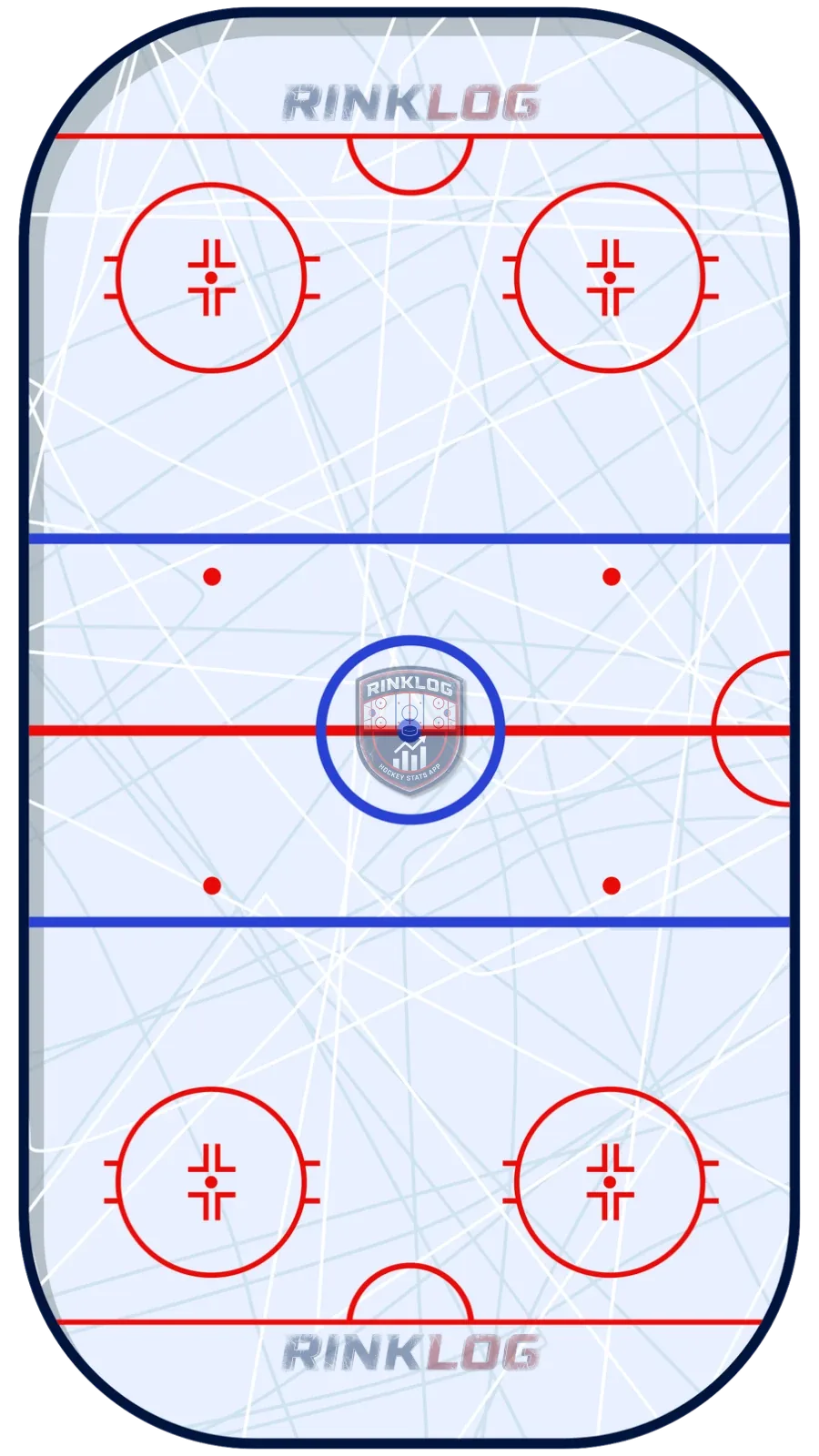
Phase 1 / 3Defensive zone
When the puck is high, F1 stands eye to eye with the lone defenseman (O5), the most common five-on-three setup the power play runs. D1 and D2 stay at the base of the triangle, ready to block shots.
- Our team
- Opponents
- Pass
- Shot
- Puck
The one-high triangle, shown in the diagram above, answers the most common five-on-three setup: a single opposing defenseman at the top. The center player stands eye to eye with that defenseman as long as the puck is high, then drops back to the middle once it goes low, using his stick to deny the pass between the two low players. Both defensemen stay at the base of the triangle, ready to force the carrier outside and cover the net.
Against a power play with two defensemen high, two other reads exist. The inverted triangle places one player on each side at mid-height, moving up and down with the puck, while the third shifts post to post to deny any lateral pass between the two high players. Splitting the D's instead keeps a single player central, denying high passes through the middle, while the other two form the base and cover low.
The common thread across all three reads is arithmetic: with three players, nobody can cover five spots at once. Staying compact and tight, being strong on rebounds, and knowing where one-timers could come from become the real skills of the system, more than the formation itself.
The main danger, named explicitly for every read, comes from one-timers off the sides. The moment the puck reaches a low player, the defensemen have to step into his shooting lane with an active stick, without ever drifting too wide or too high and opening the central lane the triangle protects above all.
One nuance matters before judging a sequence: it rarely lasts the full two minutes, since the first penalty usually expires well before the end. A unit that holds its own for ninety seconds of a double penalty kill is already doing exceptional work, even if it eventually gives up a goal.
The geometry always gives away a three on five: three players in a triangle rather than a box, a surplus of space the opponent tries to exploit on the weak side. Watch how many one-timers the unit allows from the sides: it is the most direct signal that the read is slipping. Did the triangle truly hold, or only delay the inevitable? The zone and moment of every shot stay in RinkLog, there to reread with a cool head.
- Three triangles possible, chosen by whether the power play stacks one or two defensemen high
- The center player denies the pass between the two low players once the puck drops
- One-timers off the sides are the main danger to anticipate
- Stay compact, strong on rebounds, never too wide or too high
RinkLog measures and computes all of this automatically during your hockey, ball hockey and ringette games.
No credit card required. The free plan stays free.
Frequently asked questions
Should a three on five always end in a goal against?
No. The taught benchmark is roughly one goal in two chances, still far better than an automatic surrender. And since the sequence rarely lasts the full two minutes, holding for even ninety seconds already counts as a win.
Which triangle should you pick on a three on five?
It depends on the power play's setup, not on preference. A single high defenseman calls for the one-high triangle; two high defensemen call for the inverted triangle or the split-the-D's option, depending on whether the team prefers denying high passes or covering more of the low ice.
The free plan lets you create a player and track their games with no credit card.
Create my free accountOn the same topic
- How do you play a three on four penalty kill?The three on four in hockey: easier than a three on five, but it forces a clear choice between covering both high shooters and packing the box.
- What is the penalty kill box?The penalty kill box explained: four compact killers, the retreating box that gives up the outside, its strengths, weaknesses, and how it gets beaten.
- How does a hockey penalty kill work?How a hockey penalty kill works: face-offs, forecheck systems, the box, the diamond press, five on three, and what makes a great penalty killer.