No credit card required. The free plan stays free.
On this page
- What size hockey equipment does my child need?
- How do you measure a hockey player?
- Junior, intermediate or senior: which category?
- What size hockey helmet? And when should you replace it?
- What size hockey shoulder pads and elbow pads?
- What size hockey gloves (in inches)?
- What size hockey pants and shin guards?
- Is a neck guard mandatory in hockey?
- Why shouldn't you buy hockey equipment too big?
- Frequently asked questions
What size hockey equipment does my child need?
Enter height and weight: the tool gives the category and a first estimate for every piece. Then add the measurements you took with a tape. Each one replaces the estimate with the manufacturer chart for that piece. Tap a dot on the figure to see where to measure.
The helmet and neck guard only show up with their own measurement: no chart derives head or neck size from height, and both are safety gear.
What size hockey equipment do I need?
Enter height and weight, then add the measurements you took: each one replaces an estimate with the manufacturer chart.
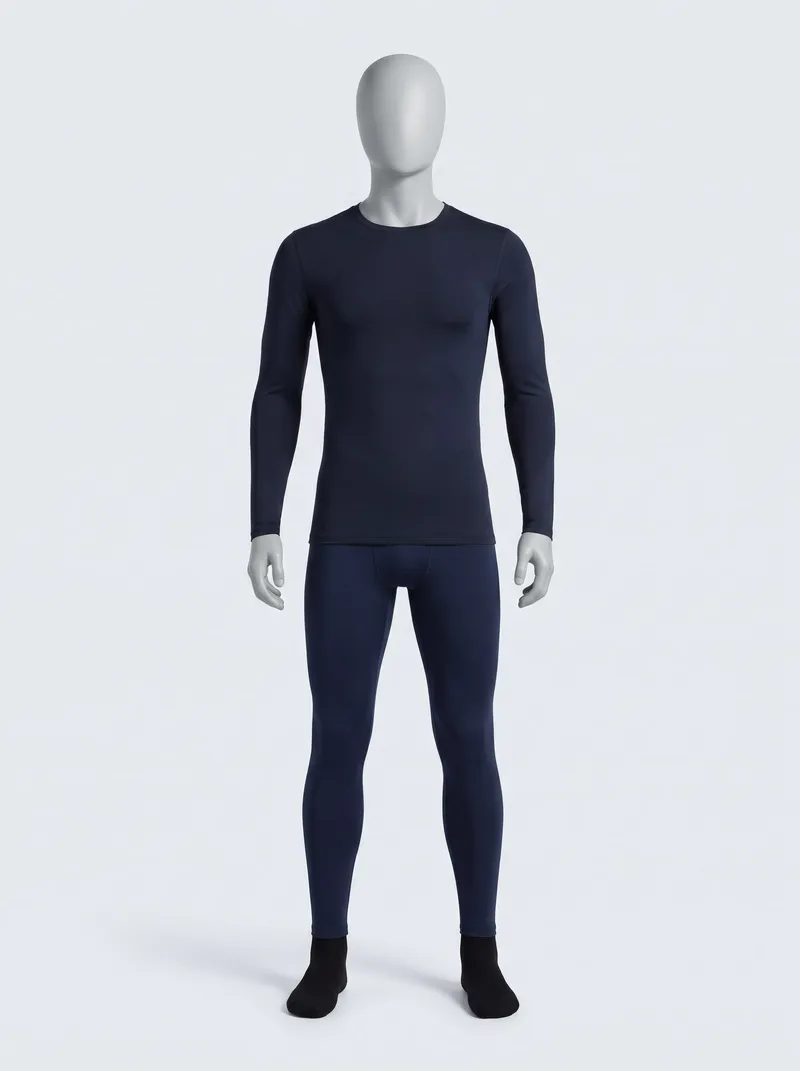
Barefoot, back to the wall, floor to top of the head.
Optional measurements
General category
Bauer grid (height and weight). Brands split sizes differently: always read the chart of the model.
Shoulder pads
INT M
Estimated: height and weightElbow pads
INT M
Estimated: height and weightGloves
11 in.
Estimated: height and weightPants
JR L
Estimated: height and weightShin guards
12 in.
Estimated: height and weight
Helmet and neck guard: add the measurement (points 1 and 2). No chart derives them from height.
A starting point, not a fitting. Don't buy big to grow into: gear that is too big leaves gaps uncovered.
No credit card required. The free plan stays free.
How do you measure a hockey player?
You need a soft measuring tape, ideally a second person, and a player in thin base layers. For three pieces, manufacturers and retailers do not measure the same thing, and mixing the two methods gives one to two sizes of difference. Each time, we kept the manufacturer catalogue method (Bauer, CCM, Warrior), the one used by the tables on this page:
Step 1: Head
Tape level, about 1 in. (2.5 cm) above the eyebrows, just above the ears, around the widest part of the back of the head.
Step 2: Chest
Just below the armpits, around the fullest part of the chest, arms relaxed, without puffing up.
Step 3: Elbow to wrist
Arm bent at 90 degrees: from the point of the elbow to the wrist crease. Not the "arm straight, biceps to forearm" method some retailers use, which reads 1.5 to 2 in. longer.
Step 4: Hand length
Hand flat, palm up: from the tip of the middle finger to the wrist crease. That number times two, in inches, roughly gives the glove size.
Step 5: Waist
Just above the hip bones, where the pants sit.
Step 6: Knee to ankle
No skate: from the centre of the kneecap to the centre of the outer ankle bone. Not "knee to the top of the skate", a retailer measurement that reads smaller.
Height is taken barefoot, back to the wall. For skates, what counts is foot length, standing, in socks: see hockey skate sizing. For the stick, the right length and flex.
Junior, intermediate or senior: which category?
There is no universal grid: each brand cuts its categories differently. Bauer's grid is the only one that gives both height and weight, in two unit systems. It is the one the tool uses for the general category.
| Size | Category | Height | Weight |
|---|---|---|---|
| YTH S | Youth (YTH) | 36 to 42 in. (91 to 107 cm) | 31 to 42 lb (14 to 19 kg) |
| YTH M | Youth (YTH) | 41 to 47 in. (104 to 119 cm) | 40 to 53 lb (18 to 24 kg) |
| YTH L | Youth (YTH) | 46 to 53 in. (117 to 135 cm) | 51 to 64 lb (23 to 29 kg) |
| JR S | Junior (JR) | 50 to 56 in. (127 to 142 cm) | 53 to 68 lb (24 to 31 kg) |
| JR M | Junior (JR) | 55 to 59 in. (140 to 150 cm) | 66 to 79 lb (30 to 36 kg) |
| INT M | Intermediate (INT) | 58 to 65 in. (147 to 165 cm) | 79 to 99 lb (36 to 45 kg) |
| INT L | Intermediate (INT) | 65 to 69 in. (165 to 175 cm) | 97 to 150 lb (44 to 68 kg) |
| SR M | Senior (SR) | 67 to 71 in. (170 to 180 cm) | 130 to 170 lb (59 to 77 kg) |
| SR L | Senior (SR) | 69 to 73 in. (175 to 185 cm) | 150 to 190 lb (68 to 86 kg) |
| SR XL | Senior (SR) | 71 to 77 in. (180 to 195 cm) | 170 to 209 lb (77 to 95 kg) |
| SR XXL | Senior (SR) | 73 to 78.5 in. (185 to 200 cm) | 190 to 229 lb (86 to 104 kg) |
| SR XXXL | Senior (SR) | 75 in. and up (191 cm) | 209 lb and up (95 kg) |
Swipe the table sideways to see every column.
Beyond the category, each piece has its own chart: a player can wear Senior M shoulder pads and Intermediate L elbow pads.
Bauer's shared grid for shoulder pads, elbow pads and pants, transcribed in metric by Gillmania. CCM gives no weights and has no intermediate category in its tables; Warrior has a Senior XS (152 to 168 cm). Ranges overlap from one brand to the next.
What size hockey helmet? And when should you replace it?
The helmet is sized by head circumference, and the same 56 cm (22 in.) head can be a small or a medium depending on brand and model. A good fit puts the front of the helmet just above the eyebrows, the helmet does not move when the player shakes their head, and the chin strap is snug, not dangling.
Certification. Hockey Canada rule 3.6(b) requires every player, goalies included, to wear a CSA-certified helmet with an unaltered CSA-certified face protector. CSA certification does not expire: according to Hockey Canada and a CSA letter, the date on the sticker is the year of manufacture. The 6.5-year expiry people talk about belongs to the American HECC certification, mandatory under USA Hockey, which does not apply in Canada.
When to replace it? There is no fixed lifespan: replace a helmet that is cracked, whose padding is loose or missing, or that took a violent hit. After a blow to the head, the player comes before the helmet: see the signs of a concussion.
| Brand | S | M | L |
|---|---|---|---|
| Bauer | 20 to 22 in. (51 to 55.5 cm) | 21.5 to 23 in. (54.5 to 59 cm) | 22.5 to 24.5 in. (57.5 to 62 cm) |
| CCM | 20 to 22 in. (51 to 56 cm) | 21.5 to 23 in. (55 to 59 cm) | 22.5 to 24.5 in. (57 to 62 cm) |
| Warrior | 21.5 to 22 in. (54 to 56 cm) | 22 to 23 in. (56 to 59 cm) | 23 to 24.5 in. (59 to 62 cm) |
Swipe the table sideways to see every column.
Bauer and Warrior: Hockey Monkey generic charts. CCM: SkatePro (updated May 8, 2026); Hockey Monkey also lists a CCM XS from 48 to 53 cm. A medium runs from 54 to 60 cm depending on the model: read the chart for the exact helmet. Below 51 cm, brands offer a one-size youth helmet.
What size hockey shoulder pads and elbow pads?
Shoulder pads are sized by chest circumference. They cover the shoulders, upper back, chest and upper arms, and the back overlaps the pants slightly. A simple test: with the arms raised a little above the shoulders, the pads should not dig into the neck.
Elbow pads are sized by forearm length, arm bent at 90 degrees, from the elbow to the wrist crease. The cup should sit on the point of the elbow, the top should meet the bottom of the shoulder pad's bicep guard, and the bottom should reach the cuff of the glove. With short-cuff gloves, pick an elbow pad long enough to meet the glove.
| Size | Shoulder pads: chest | Elbow pads: elbow to wrist |
|---|---|---|
| YTH S | 20 to 22 in. (51 to 56 cm) | 6 to 7 in. (15 to 18 cm) |
| YTH M | 22 to 24 in. (56 to 61 cm) | 6.5 to 7.5 in. (16 to 19 cm) |
| YTH L | 23 to 25 in. (59 to 64 cm) | 7 to 8 in. (18 to 20 cm) |
| JR S | 24 to 26 in. (61 to 66 cm) | 8 to 9 in. (20 to 23 cm) |
| JR M | 26 to 28 in. (66 to 71 cm) | 8.5 to 10 in. (22 to 25 cm) |
| INT M | 28 to 32 in. (71 to 81 cm) | 9.5 to 10.5 in. (24 to 27 cm) |
| INT L | 32 to 40 in. (81 to 102 cm) | 10 to 11.5 in. (26 to 29 cm) |
| SR M | 38 to 42 in. (97 to 107 cm) | 10.5 to 12.5 in. (27 to 32 cm) |
| SR L | 40 to 44 in. (102 to 112 cm) | 11.5 to 13.5 in. (29 to 34 cm) |
| SR XL | 42 to 46 in. (107 to 117 cm) | 12.5 to 14.5 in. (32 to 37 cm) |
| SR XXL | 44 in. and up (112 cm) | - |
Swipe the table sideways to see every column.
Bauer guide transcribed in metric by Gillmania. Chest just below the armpits; forearm measured with the arm bent at 90 degrees, from the point of the elbow to the wrist crease. Inch conversions are ours.
Bauer has no Senior S shoulder pad; CCM and Warrior do. If your measurement falls in two sizes, try both: the one that leaves the smallest gaps between pieces wins.
What size hockey gloves (in inches)?
Gloves are sold in inches, from 8 to 15. Measure the hand flat, from the tip of the middle finger to the wrist crease, and read the chart; roughly, that measurement in inches times two gives the size. A good fit feels like slightly loose winter gloves at the fingertips, and the cuff reaches the bottom of the elbow pad.
| Glove | Hand: middle fingertip to wrist | Height | Weight |
|---|---|---|---|
| 8 in. | 4 to 5 in. (10.5 to 13 cm) | 39 to 49 in. (99 to 124 cm) | 40 to 60 lb (18 to 27 kg) |
| 9 in. | 4.5 to 5.5 in. (11.5 to 14 cm) | 45 to 55 in. (114 to 140 cm) | 51 to 71 lb (23 to 32 kg) |
| 10 in. | 5 to 6 in. (13 to 15.5 cm) | 51 to 56 in. (130 to 142 cm) | 60 to 90 lb (27 to 41 kg) |
| 11 in. | 5.5 to 6.5 in. (14 to 16.5 cm) | 53 to 60 in. (135 to 152 cm) | 71 to 99 lb (32 to 45 kg) |
| 12 in. | 6 to 7 in. (15.5 to 18 cm) | 59 to 64 in. (150 to 163 cm) | 79 to 110 lb (36 to 50 kg) |
| 13 in. | 6.5 to 7.5 in. (16.5 to 19 cm) | 65 to 69 in. (165 to 175 cm) | 119 to 161 lb (54 to 73 kg) |
| 14 in. | 7 to 8 in. (18 to 20.5 cm) | 67 to 71 in. (170 to 180 cm) | 141 to 181 lb (64 to 82 kg) |
| 15 in. | 7.5 to 8.5 in. (19 to 22 cm) | 69 in. and up (175 cm) | 161 lb and up (73 kg) |
Swipe the table sideways to see every column.
Hand length: Bauer chart (Gillmania), nearly identical at CCM. Height and weight: Ice Warehouse. Ranges overlap: a 7.25 in. (18.5 cm) hand gives 13 or 14 in. True runs about half a size big, and Warrior publishes no glove chart.
What size hockey pants and shin guards?
Pants are sized by the waist, just above the hips, then checked against height. Standing, the pant leg reaches the top of the kneecap and covers the thigh guard of the shin pads without covering the knee. In a full crouch, everything should stay in place.
Shin guards are sold in inches. The manufacturer catalogue measurement runs from the centre of the kneecap to the centre of the outer ankle bone, no skate. It reads larger than the shin guard size: 18 to 19 in. (46 to 48.5 cm) means a 16 in. shin guard at Bauer. Many retailers measure from the knee to the top of the skate, seated, instead; that number is roughly equal to the size. Do not mix the two.
At the fitting, the cap is centred on the kneecap, the padding above the knee slides about 2 in. under the pants, and there is no gap between the bottom of the shin guard and the skate.
| Piece | Size | Measurement | Height |
|---|---|---|---|
| Pants | YTH S | Waist: 20 to 21 in. (51 to 53 cm) | 38 to 44 in. (97 to 112 cm) |
| Pants | YTH M | Waist: 21 to 22 in. (53 to 56 cm) | 44 to 49 in. (112 to 124 cm) |
| Pants | YTH L | Waist: 22 to 23 in. (56 to 58 cm) | 48 to 52 in. (122 to 132 cm) |
| Pants | JR S | Waist: 22 to 25 in. (56 to 64 cm) | 50 to 55 in. (127 to 140 cm) |
| Pants | JR M | Waist: 24 to 27 in. (61 to 69 cm) | 53 to 59 in. (135 to 150 cm) |
| Pants | JR L | Waist: 26 to 28 in. (66 to 71 cm) | 59 to 63 in. (150 to 160 cm) |
| Pants | JR XL | Waist: 28 to 30 in. (71 to 76 cm) | 62 to 66 in. (157 to 168 cm) |
| Pants | SR S | Waist: 30 to 33 in. (76 to 84 cm) | 64 to 68 in. (163 to 173 cm) |
| Pants | SR M | Waist: 32 to 36 in. (81 to 91 cm) | 66 to 71 in. (168 to 180 cm) |
| Pants | SR L | Waist: 34 to 38 in. (86 to 97 cm) | 69 to 74 in. (175 to 188 cm) |
| Pants | SR XL | Waist: 37 to 40 in. (94 to 102 cm) | 72 to 76 in. (183 to 193 cm) |
| Pants | SR XXL | Waist: 38 to 42 in. (97 to 107 cm) | 73 in. and up (185 cm) |
| Pants | SR 3XL | Waist: 40 in. and up (102 cm and up) | 73 in. and up (185 cm) |
| Shin guards | 8 in. | Knee to ankle: 10 to 11 in. (25.5 to 28 cm) | 40 to 44 in. (102 to 112 cm) |
| Shin guards | 9 in. | Knee to ankle: 11 to 12 in. (28 to 31 cm) | 44 to 48 in. (112 to 122 cm) |
| Shin guards | 10 in. | Knee to ankle: 12 to 13 in. (31 to 33.5 cm) | 48 to 52 in. (122 to 132 cm) |
| Shin guards | 11 in. | Knee to ankle: 13 to 14 in. (33.5 to 36 cm) | 52 to 56 in. (132 to 142 cm) |
| Shin guards | 12 in. | Knee to ankle: 14 to 15 in. (36 to 38.5 cm) | 56 to 60 in. (142 to 152 cm) |
| Shin guards | 13 in. | Knee to ankle: 15 to 16 in. (38.5 to 41 cm) | 60 to 64 in. (152 to 163 cm) |
| Shin guards | 14 in. | Knee to ankle: 16 to 17 in. (41 to 43.5 cm) | 64 to 68 in. (163 to 173 cm) |
| Shin guards | 15 in. | Knee to ankle: 17 to 18 in. (43.5 to 46 cm) | 67 to 71 in. (170 to 180 cm) |
| Shin guards | 16 in. | Knee to ankle: 18 to 19 in. (46 to 48.5 cm) | 70 to 74 in. (178 to 188 cm) |
| Shin guards | 17 in. | Knee to ankle: 19 to 20.5 in. (48.5 to 51.5 cm) | 73 in. and up (185 cm) |
Swipe the table sideways to see every column.
Pants: Ice Warehouse generic chart, waist just above the hips. Shin guards: Bauer chart (Gillmania), from the centre of the kneecap to the centre of the outer ankle bone, no skate; the height column comes from the Warrior chart, which uses the same measurement. The transcribed CCM 2025 catalogue runs about one size shorter for the same measurement.
Is a neck guard mandatory in hockey?
Yes in minor hockey. Hockey Canada rule 3.6(f) makes a BNQ-certified neck guard (Bureau de normalisation du Québec) mandatory for every player registered in minor and female hockey. In Quebec, regulations also require a neck guard meeting standard NQ 9415-370 whenever the rink is booked for hockey, on top of the CAN/CSA-Z262.1 helmet and the CAN/CSA-Z262.2 full face protector. Government and municipal posters call it mandatory; we could not read the regulation itself to confirm exactly how it applies to adults.
A neck guard is sized by neck circumference. It should be snug without choking and cover the whole throat. The bib style goes under the shoulder pads and covers the upper chest. A neck guard protects against cuts, not against spinal injuries.
| Size | Neck circumference |
|---|---|
| Youth (YTH) | 8.5 to 12.5 in. (22 to 32 cm) |
| Junior (JR) | 10 to 14 in. (25 to 36 cm) |
| Senior (SR) | 13.5 to 17 in. (34 to 43 cm) |
Swipe the table sideways to see every column.
Ice Warehouse generic chart. Sizes overlap widely: try it on, the neck guard should cover the whole throat without choking.
Why shouldn't you buy hockey equipment too big?
Because hockey equipment protects by overlapping: each piece meets the next. The shoulder pad meets the elbow pad, the elbow pad meets the glove cuff, the pants cover about 2 in. of the top of the shin guard, the shin guard reaches the skate. A piece that is too big slides, twists and opens a gap exactly where a puck or a stick hits. A helmet that is too big moves on the head, which defeats its purpose.
Buying "to grow into" is tempting with a child who is shooting up, but an equipment fitting guide attributed to Hockey Canada, read in a copy hosted by a minor hockey association, specifically warns against it for skates. A piece in the right size is better, even if it means reselling or swapping it next year: several minor hockey associations run used equipment swaps. To sort what is worth buying new from the rest, see when to invest in equipment, the beginner equipment list and the cost of a season.
If you track their games in RinkLog (attendance, ice time, shots), you will also see the season go by, and the moment the next size is due rarely comes as a surprise. For a goalie, gear is measured differently: see goalie equipment sizing.
RinkLog measures and computes all of this automatically during your hockey, ball hockey and ringette games.
No credit card required. The free plan stays free.
Frequently asked questions
How do I know what size hockey equipment to buy?
Measure each piece with its own measurement: head (helmet), chest (shoulder pads), elbow to wrist (elbow pads), hand (gloves), waist (pants), knee to ankle (shin guards). Then read the brand chart and try it on: each piece should meet the next with no gap.
How do you measure for hockey shin guards?
Without skates, from the centre of the kneecap to the centre of the outer ankle bone: that is the Bauer, CCM and Warrior catalogue measurement. At Bauer, 18 to 19 in. means a 16 in. shin guard. If a retailer measures from the knee to the top of the skate, its chart is different: do not mix the two.
What size shoulder pads for a 10-year-old?
Age is not enough. At Bauer, a Junior M runs from 55 to 59 in. and 66 to 79 lb, with a 26 to 28 in. chest. Measure the chest just below the armpits and read the chart: that is what decides.
Is my hockey helmet expired?
In Canada, no: CSA certification does not expire, and the date on the sticker is the year of manufacture. The 6.5-year expiry applies to the American HECC certification. Replace the helmet if it is cracked, if the padding is loose or missing, or after a violent hit.
Is a neck guard mandatory?
In minor and female hockey, yes: Hockey Canada rule 3.6(f) requires a BNQ-certified neck guard. In Quebec, regulations also require a neck guard meeting standard NQ 9415-370 when the rink is booked for hockey.
Are Bauer, CCM and Warrior sizes the same?
Close, not identical. A 56 cm (22 in.) head is a medium at Bauer but a small or medium at CCM and Warrior. CCM has no intermediate category in its tables, Warrior has a Senior XS. Always read the chart for the brand and model.
Should I buy bigger so it lasts two seasons?
No. Equipment protects by overlapping: a piece that is too big slides and opens gaps between the pads. Buy the right size, then resell or swap next year.
References
Every number on this page comes from one of these sources. The links lead to the original text.
Gillmania
Bauer hockey size charts
gillmania.com, transcription des guides Bauer en métrique (consulté le 30 octobre 2026)
Bauer shared grid, shoulder pads, elbow pads, gloves and shin guards. Site not affiliated with the brands.
Read itGillmania
CCM hockey size charts (2025 team catalogue)
gillmania.com (consulté le 30 octobre 2026)
CCM grid by age and height, without weights or an intermediate category.
Read itGillmania
Warrior hockey size charts (2024 catalogue)
gillmania.com (consulté le 30 octobre 2026)
Height matched to shin guards (same measurement as Bauer), Senior XS.
Read itHockey Monkey
Bauer Helmet Sizing Chart
hockeymonkey.com (consulté le 30 octobre 2026)
Head circumference, tape position, Bauer S, M, L sizes.
Read itSkatePro
CCM helmet size guide
skatepro.ca, mis à jour le 8 mai 2026 (consulté le 30 octobre 2026)
CCM helmet sizes by head circumference.
Read itIce Warehouse
How to Size a Hockey Glove
icewarehouse.com (consulté le 30 octobre 2026)
Glove size by age, height and weight; the hand-times-two rule.
Read itIce Warehouse
How to Size an Ice Hockey Pant
icewarehouse.com (consulté le 30 octobre 2026)
Waist just above the hips, generic chart, standing fit.
Read itIce Warehouse
How to Size a Hockey Neck Guard
icewarehouse.com (consulté le 30 octobre 2026)
Neck guard sizes by neck circumference.
Read itHockey Canada
Reminder Regarding Hockey Helmet Certification and BNQ-Certified Neck Protectors
cdn.hockeycanada.ca, PDF (consulté le 30 octobre 2026)
Rules 3.6(b) and 3.6(f): CSA helmet and cage, BNQ neck guard; the CSA date is the year of manufacture; HECC does not apply in Canada.
Read itGouvernement du Québec
Réglementation : hockey
quebec.ca (consulté le 30 octobre 2026)
NQ 9415-370 neck guard, CAN/CSA-Z262.1 helmet and CAN/CSA-Z262.2 face protector when the rink is booked for hockey.
Read it
The free plan lets you create a player and track their games with no credit card.
Create my free accountOn the same topic
- Hockey skate size chart: size, fit and the real differences between modelsFind your hockey skate size from your foot in cm or inches, decode Bauer Fit 1, 2, 3 and CCM fits, and compare Vapor, Supreme, Jetspeed and Tacks.
- Skate sharpening explained: radius of hollow, profiling and how oftenPick your skate hollow by weight in lb and kg, see what 1/2 vs 5/8 really changes, learn what profiling does and how often to sharpen, in hours of ice time.
- Is top-of-the-line hockey gear worth it? It depends on how often you skateCost per session of skates, sticks and helmets by tier and by how often you play. Where to spend, where to save, used gear and warranties, with real numbers.
- How much does a season of youth hockey cost in Quebec?Youth hockey registration fees by age group, AA and AAA extras, tournaments, sharpening, gear and financial help: the real budget of a season in Quebec.
- Beginner hockey equipment list: what to buy, in what order, at what priceThe 12 pieces of beginner hockey gear in the order you put them on, what is mandatory, what a first set costs, and what you can safely buy used.