
No credit card required. The free plan stays free.
On this page
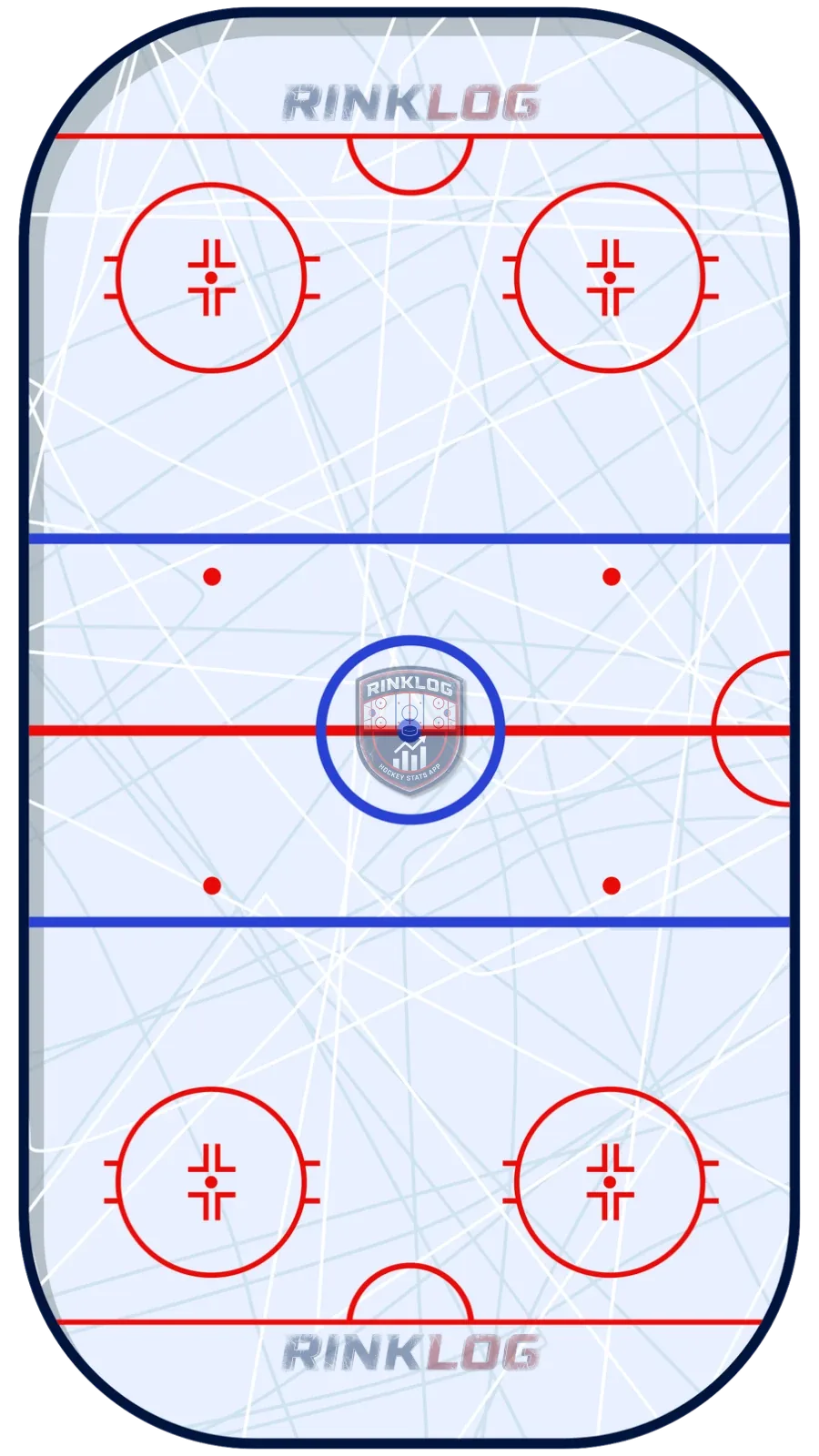
Phase 1 / 4Full ice
F1, the puck carrier, enters wide with speed through the neutral zone while F2 comes down the other side without the puck. X1 stands alone as the only defender, positioned in the middle of the ice.
- Our team
- Opponents
- Pass
- Shot
- Puck
Phase 1 / 5Full ice
F1 drives wide with the puck toward the corner while F3, on the other side, also drives wide without the puck. F2 stays back, available for the top of the slot. X1 and X2 protect the middle of the zone.
- Our team
- Opponents
- Pass
- Shot
- Puck
The moment an odd-man rush takes shape in the neutral zone, speed becomes the only real weapon: slowing down gives backchecking defenders time to erase the advantage before the blue line is even reached. On a two on one, shown in the diagram above, both attackers can crisscross through the neutral zone while keeping their speed, then angle in toward the middle as they cross the blue line. The carrier then settles into triple-threat position, puck close to the body, ready to pass, shoot or make a move, forcing the defenseman and the goalie to decide before he has even decided himself.
A two on two adds a second defenseman and three ways to play it. The crisscross isolates one defenseman: the carrier starts a lateral move while staying the player closest to both defenders, while his teammate crosses the opposite way, always trailing behind to avoid offside. The midlane drive flips the roles: it is the player without the puck who drives into the space between the two defensemen, just inside the blue line, while the carrier crosses in behind him. The double drive drops the crisscross entirely: both attackers drive their own lane, and the carrier can drop the puck to the second defenseman's inside shoulder for his teammate arriving there, or shoot himself while the other drives for the rebound.
The high triangle, shown in the second diagram, forces both defensemen into man coverage on two attackers while the third stays free. Both wingers drive wide toward a corner each, while the center stays back, available for a pass to the high slot. The carrier reads whether the defenseman follows the far winger on his wide drive: if he follows, the winger left open gets the puck for a high-slot shot; if he does not, the carrier passes or shoots directly to create a rebound.
The midlane drive instead hands the lead role to the center, who drives straight to the net aiming for the second defenseman's inside shoulder, neutralizing him completely and turning the situation into a two on one for both wingers. The triple drive pushes that logic further: all three attackers drive to the net at once, no one held back, while the carrier goes around the nearest defenseman on the outside then cuts back inside right away for a shot against the grain from the prime scoring area.
The drive and delay instead relies on timing: the outside carrier drives hard, selling the fake of a deep shot, then pivots sharply to the outside the moment the defenseman is level with him, before skating back toward the blue line to buy time and space while his teammates get back in position. The modern variant, the press-and-pull play, adds one detail: the center, instead of staying planted in front of the net, moves away from it to find open shooting room on the very side the carrier is pivoting toward, which often produces a one-timer on his strong side.
All of these variants read at a glance: count the attackers, count the defenders, and watch whether speed holds all the way to the blue line instead of fading. A poorly executed odd-man rush rarely ends in a quality shot, no matter how big the numbers advantage looked at first. Under that lens, the real test of an odd-man rush is never the headcount, it is what RinkLog adds up afterward, shot by shot, once the sequence is over.
- On an odd-man rush, slowing before the blue line gives backcheckers time to erase it
- Two on two: crisscross, midlane drive or double drive, three distinct reads
- High triangle: the read depends on whether the defenseman follows the far winger or not
- The three-man midlane drive neutralizes a defenseman and creates a two on one for the wingers
- The drive and delay buys time through timing, not raw speed
RinkLog measures and computes all of this automatically during your hockey, ball hockey and ringette games.
No credit card required. The free plan stays free.
Frequently asked questions
What is the absolute priority on a two on one?
The carrier attacks the defenseman straight on in triple-threat position, puck close to the body, ready to pass, shoot or make a move, which freezes the defenseman's decision before the carrier has even chosen himself. He holds the pass until the very last moment to force that commitment. If the defenseman cheats toward the pass, the carrier's own shot stays the default option.
What is the difference between the crisscross and the midlane drive on a two on two?
The crisscross isolates one defenseman by swapping the two attackers' paths, with the carrier staying the player closest to the defenders. The midlane drive instead lets the player without the puck drive into the space between the two defensemen, with the carrier crossing in behind once that drive starts.
How do you read a three-on-two high triangle?
By watching whether the defenseman follows the winger driving wide on the far side. If he follows, the winger left open is available for a high-slot shot. If he stays centered, the carrier passes or shoots directly to create a rebound in front of the net.
The free plan lets you create a player and track their games with no credit card.
Create my free accountOn the same topic
- How do you execute a zone entry in hockey?How to execute a clean zone entry in hockey: cross-ice dumps, chips, wide-lane drives, mid-ice entries and the funnel in front of the net.
- How do you defend the rush in hockey?Defending the rush in hockey: reading the odd-man break, the real two on one, the two ways to play it, and why holding the middle is the fallback.
- What are the main hockey systems?The main families of hockey systems: breakouts, forechecks, neutral zone, attack zone, defensive coverage, special teams and face-offs, explained simply.